5-Step Smart Christmas Tree Lights Setup for Artificial Trees
 Sam VasquezBuying Guide Lead
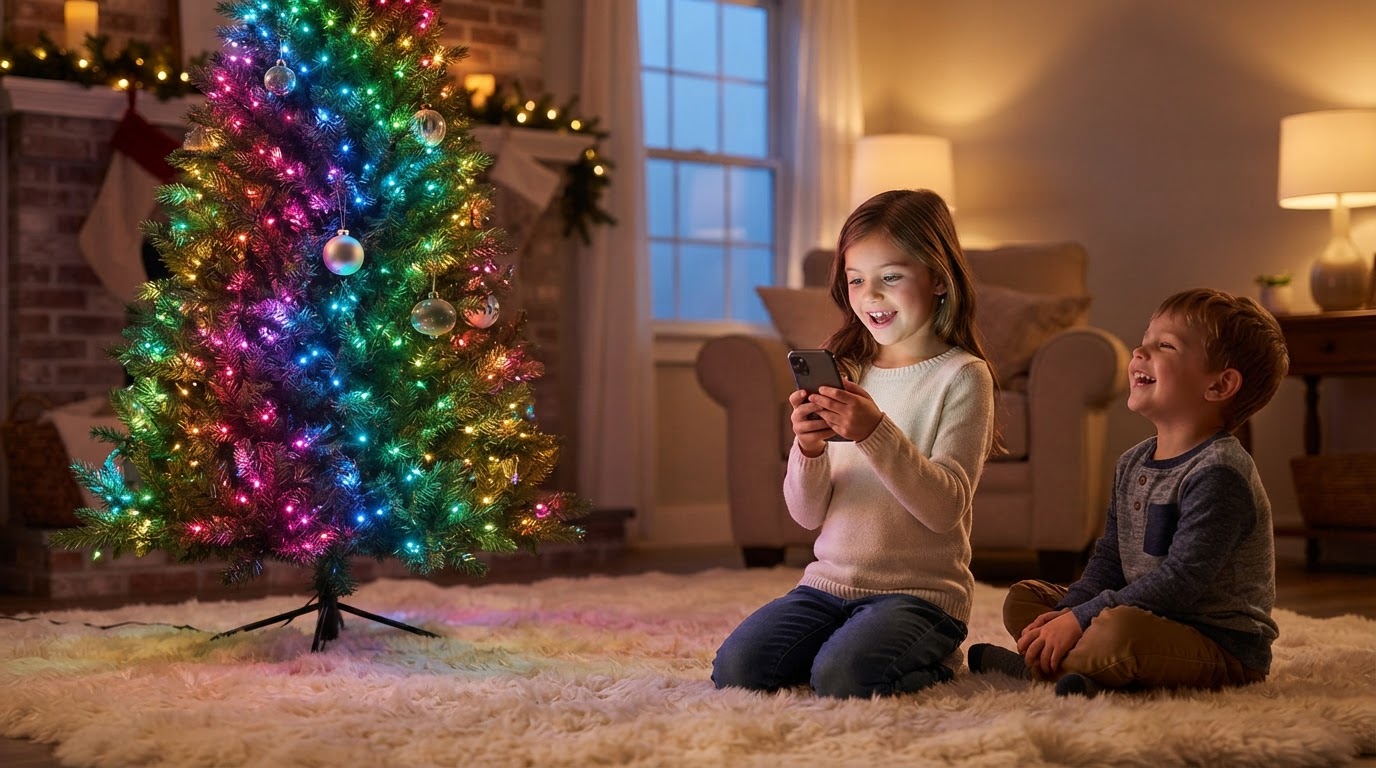
September 23, 2026 — The integration of advanced mapping technology into artificial greenery is redefining how we approach seasonal decorating, specifically through the use of Smart Christmas Tree Lights. As more households move away from traditional incandescent strands, the focus has shifted toward high-density LED systems that offer granular control over individual bulbs. According to Balsam Hill, Twinkly lighting technology now allows users to create and control animated light shows directly on their mobile devices, effectively turning a static artificial tree into a dynamic digital canvas. This shift reflects a broader consumer move toward energy efficient smart holiday lighting that combines aesthetic flexibility with lower power consumption.
The 5-Step Artificial Tree Integration
When you are transitioning to smart christmas tree lights on an artificial frame, the process differs from real timber because the branch structure is uniform and often allows for tighter wire management. The first step involves checking the IP rating of your hardware; for example, the Philips Hue Festavia string lights carry an IP44 weatherproof rating, making them robust enough for indoor artificial setups where dust or moisture might accumulate in storage. Second, ensure your Wi-Fi signal is strong near the tree location, as app-controlled Christmas lights require a consistent 2.4GHz connection to process real-time animation data. Third, utilize 3D mapping features. Using your smartphone camera, the software identifies the exact coordinate of every LED on your artificial branches. Fourth, synchronize the controller with your smart home ecosystem. Modern systems are frequently Alexa-compatible, allowing for voice-activated scene changes. Finally, calibrate the brightness levels to match your room's ambient light. If you are working with RGBIC technology, you can address individual segments of the strand to create gradients that traditional RGB strands cannot achieve. Between these two, I’d go with the Twinkly strings for artificial trees because their mapping software is significantly more mature than most competitors, handling the uniform branches of a pre-lit or unlit artificial tree with high precision.
Expert tip: If you are using an artificial tree with a high tip count, skip the standard 200-count strands and look for high-density options. A 130-foot strand like the Festavia provides better coverage for a standard 7.5-foot tree without visible gaps in the wire, ensuring the 3D mapping software has enough data points to render complex animations smoothly.
If you're on a budget, you might be tempted to buy basic Bluetooth strands, but I would suggest waiting until you can afford a system with full Wi-Fi integration. Skip this if you only plan to turn the lights on and off with a manual timer, as the primary value of these systems lies in the software customization. When you invest in smart christmas tree lights, you are paying for the software ecosystem as much as the hardware. Proper installation on an artificial tree ensures that your energy efficient smart holiday lighting lasts for several seasons without the need for re-stringing.
Shop Smart Christmas Tree Lights.
Sources
- Indoor & Outdoor Christmas Lights: Decor & Tree Lights | Twinkly
- Artificial Christmas Trees with App Controlled Lights | Balsam Hill
- 6 Best Smart Christmas Lights (2025): Twinkly, Govee, Cync | WIRED